Easter!
The season of Easter lasts 50 days, beginning on the Sunday of the Resurrection (March 31st this year) and lasting through the Day of Pentecost (May 19th). Join us in this season of remembering and celebrating Jesus’ resurrection from the dead and what that means for our lives. May we live for peace, justice, equity, and love, following the teachings of Jesus.
All are welcome to join us for worship!
Sundays: 8 am contemplative and quiet service with Holy Eucharist and 10 am music and children’s formation with Holy Eucharist- all are welcome! Check out our Facebook page (St. Paul’s Episcopal Church Medina) or our Youtube channel for more information.
All are welcome. Come as you are! Participate in as much or as little as you like. Ask questions. Know that God loves you.
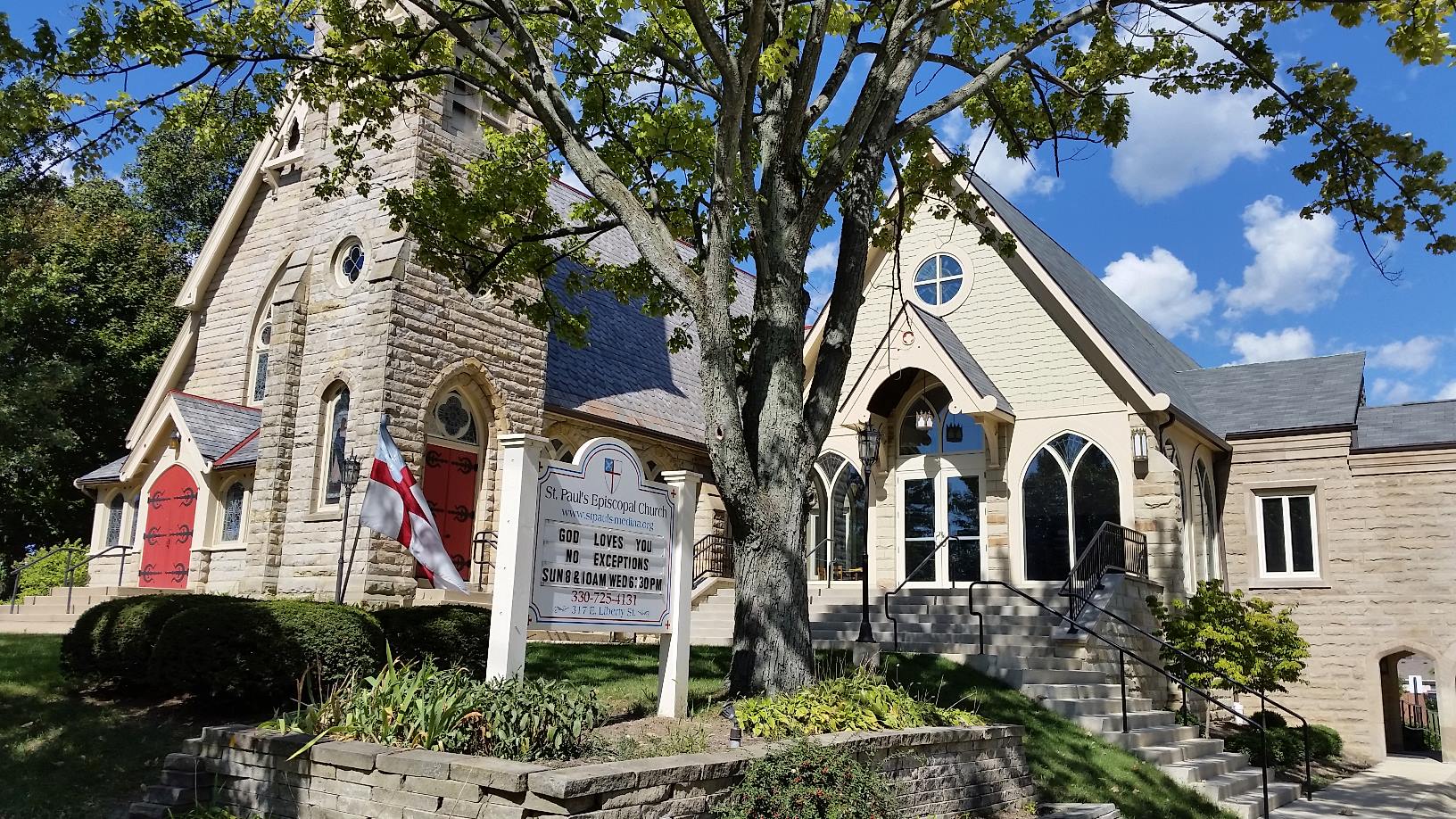
Worship Schedule
Sunday Worship -Join us at either 8:00 am or 10:00 am for in person Holy Eucharist. 8:00 am also has a Zoom option. The last Sunday of each month we will have Healing Prayer and Anointing with oil.
Wherever you are on you spiritual journey, you are welcome to join us for our services. Come as you are to learn, pray and be in community with others during this Easter season, where we read and hear Gospel stories and other passages from the Bible about the teachings, healings, mercy, and love of Jesus. And where there are several stories of Jesus’ post-resurrection appearances! All are welcome! We mean it in all its ways: we are welcoming and affirming of our siblings in the LGBTQ+ community, all socio-economic groups, all shades of skin tone, all ages, all abilities and differing abilities, all ages. We strive to be a welcoming community that follows the teachings of Jesus.
Bible Study!
We continue in our Bible Study during spring. We meet in person at church in the gallery on Sunday mornings from 9:15a-9:45a. Come with an open mind and heart. You don’t need to bring a Bible unless you would like one. The Scripture passages for study will be available in hard copy and shared on Zoom.
We also meet mid-week on Wednesdays from 9:30-10:30 in person and on Zoom for Bible Study. Same goes for this Bible Study as on Sunday, you are welcome to come, learn, give input and be open to God’s Word.
Do you like to pray in the evening? Then join our Zoom Compline Monday- Friday at 7:30pm
Call or text (216) 544-3865 for Zoom information.

If you have any questions about St. Paul’s, the events or worship services, please call our office. The office number is 330-725-4131. If no one answers please leave a message and someone will get back to you.
The Free Farmer’s Market continues to operate on a Drive-Thru basis on the 3rd Saturday of the month beginning at 8:00 am and concluding around 9:30 am.
Many groups have resumed meeting at St Paul’s. Please check with your group leader or leave a message at the church office if you need more information.

Our Covenant for Regathering in Worship and Ministry
In response to the COVID-19 pandemic, I promise, with God’s help and to the best of my ability, to abide by the guidelines of the Diocese of Ohio for participation in the life of St. Paul’s-Medina according to the regathering phase in which my congregation is authorized to carry out its mission and ministry. In fulfillment of our Baptismal Covenant, I will strive to:
-Wear a mask or scarf over my nose and mouth at all times in church buildings, except momentarily to receive the sacrament.
-Only attend worship or participate in in-person ministry and meetings if I am healthy and non-symptomatic with the novel coronavirus or any other transmittable disease that could compromise the health of another congregant.
Love my neighbor as myself
-Make no physical contact with people beyond the members of my own household.
-Maintain a six foot or more distance from others in the congregation.
-Respect any requests for distance, masking, cleaning, to ensure the safety and comfort level of others, even as restrictions are reduced.
Respect the dignity of every human being
-Trust and support the decisions of our congregational leaders.
-Stay connected with others in my community by telephone, email, video chat, or mail.
Seek and serve Christ in all people
God of the present moment,
God who in Jesus stills the storm
and soothes the frantic heart;
bring hope and courage to all
who wait or work in uncertainty.
Bring hope that you will make them the equal
of whatever lies ahead.
Bring them courage to endure what cannot be avoided,
for your will is health and wholeness;
you are God, and we need you.
This we pray in Christ our Lord. Amen.
-A New Zealand Prayer Book | He Karakia Mihinare o Aotearoa, page 765, Prayers for use in Critical Situations